


Total Hip Replacement
Total Hip Replacement in Cary, Holly Springs & Morrisville, NC
Expert Total Hip Replacement Care from Dr. Demetri M. Economedes
If hip arthritis is causing persistent pain, stiffness, difficulty walking, or limiting your everyday activities, total hip replacement may provide lasting relief and improved mobility. Demetri M. Economedes is a fellowship-trained hip and knee joint replacement specialist serving patients in Cary, Morrisville, Holly Springs, and surrounding Triangle communities.
Dr. Economedes specializes in hip and knee reconstruction and joint replacement, including minimally invasive hip replacement and revision hip replacement. His advanced fellowship training in adult joint reconstruction at Rush University supports a specialized approach to treating painful and disabling hip conditions.
If conservative treatments no longer provide adequate relief from hip arthritis, a personalized evaluation can determine whether total hip replacement is appropriate for you.
What is Total Hip Replacement?
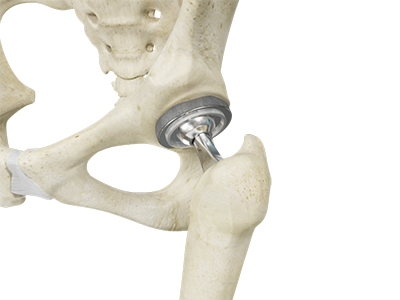 Total hip replacement is a surgical procedure in which the damaged cartilage and bone are removed from the hip joint and replaced with artificial components. The main indication for total hip replacement is arthritis.
Arthritis is the inflammation of joints, which results in pain, swelling, stiffness and limited movement. Hip arthritis is a common cause of chronic hip pain and disability.
What are the Symptoms of Arthritis?
The most common symptom of hip arthritis is joint pain and stiffness, resulting in a limited range of motion. Vigorous activity can increase pain and stiffness, which may cause limping while walking.
How is Arthritis Diagnosed?
Diagnosis is made by evaluating your medical history, performing a physical examination and taking X-rays of the arthritic joint.
What is the Procedure for Total Hip Replacement?
Surgery may be recommended if conservative treatment options such as anti-inflammatory medications and physical therapy do not relieve your symptoms.
The surgery is performed under general anesthesia. During the procedure, a surgical cut is made over the hip to expose the hip joint, and the femur is dislocated from the acetabulum. The surface of the socket is cleaned and the damaged or arthritic bone removed using a reamer. The acetabular component is inserted into the socket using screws, or occasionally, bone cement. A liner made of plastic, ceramic or metal is placed inside the acetabular component.
The femur or thighbone is then prepared by removing the arthritic bone using special instruments to exactly fit the new metal femoral component. The femoral component is then inserted into the femur either by a press fit or using bone cement. Then the femoral head component made of metal or ceramic is placed on the femoral stem. All the new parts are secured in place using special cement. The muscles and tendons around the new joint are repaired and the incision is closed.
Colorado Springs Orthopaedic Group
Dr. Economedes is a board-certified orthopedic surgeon specializing in hip and knee replacement, adult joint reconstruction, and arthritis care. Fellowship trained in Adult Joint Reconstruction at Rush University Medical Center, he provides comprehensive treatment for joint pain and mobility issues. Dr. Economedes is committed to helping patients regain function and improve quality of life through personalized care and advanced surgical techniques.
What is Postoperative Care Involved in Total Hip Replacement?
After undergoing total hip replacement, you must take special care to prevent the new joint from dislocating and ensure proper healing. Some of the common precautions to be taken include:
- Avoid the combined movement of bending your hip and turning your foot inwards
- Keep a pillow between your legs while sleeping for 6 weeks
- Never cross your legs and bend your hips past a right angle (90)
- Avoid sitting on a low chair
- Avoid bending down to pick up things; instead, a grabber can be used to do so
- Use an elevated toilet seat
What are the Risks and Complications of Total Hip Replacement?
As with any major surgical procedure, there are certain potential risks and complications involved with total hip replacement surgery. The possible complications after total hip replacement may include:
- Infection
- Dislocation
- Fracture of the femur or pelvis
- Injury to nerves or blood vessels
- Formation of blood clots in the leg veins
- Leg length inequality
- Wearing out of the hip prosthesis
- Failure to relieve pain
- Scar formation
- Pressure sores
Why Choose Dr. Demetri M. Economedes for Total Hip Replacement in Cary, Holly Springs & Morrisville, NC?
Choosing a hip replacement surgeon is an important decision. Dr. Economedes focuses his practice on hip and knee orthopaedic and joint replacement, giving patients access to specialized care for both primary and revision joint replacement.
Fellowship-Trained Joint Replacement Specialist
Dr. Economedes completed advanced Adult Joint Reconstruction Fellowship training at Rush University in Chicago, with focused training in hip and knee reconstruction and replacement.
Specialized Hip and Knee Expertise
His practice focuses on hip and knee conditions, including total hip replacement, minimally invasive hip replacement, and revision hip replacement.
Personalized Treatment Planning
Hip replacement is not appropriate for everyone. Dr. Economedes evaluates your symptoms, activity level, medical history, examination findings, and imaging to determine the most appropriate treatment approach.
Focus on Mobility and Quality of Life
The goal of hip replacement is not simply to replace a damaged joint. Treatment is designed to reduce pain, improve mobility, and help you return to everyday activities.
Convenient Triangle-Area Locations
Dr. Economedes sees patients at orthopaedic offices in Cary, Holly Springs & Morrisville, NC, providing convenient access to specialized hip and knee care throughout the Triangle.
Total Hip Replacement FAQs
Total hip replacement may be considered when hip arthritis causes significant pain and stiffness that interferes with walking, sleep, work, exercise, or everyday activities and non-surgical treatments no longer provide sufficient relief.
Severe hip osteoarthritis is a common reason for hip replacement. Other conditions may also damage the hip joint and lead to persistent pain and loss of function. An orthopaedic evaluation can determine the underlying cause of your symptoms.
Recovery varies from patient to patient. Many patients gradually resume normal activities during the first several weeks, while strength, mobility, and overall recovery continue to improve over the following months. Your surgeon will provide an individualized recovery and rehabilitation plan.
Rehabilitation is an important part of recovery. Your care team may recommend exercises and physical therapy to help restore strength, mobility, balance, and function after surgery.
Your candidacy depends on factors such as the severity of your hip damage, symptoms, activity limitations, imaging findings, overall health, and response to non-surgical treatment. A consultation with Dr. Economedes can help determine whether hip replacement is appropriate.
Dr. Economedes provides hip and knee orthopaedic care at locations in Cary, Holly Springs & Morrisville, NC, North Carolina, serving patients throughout the surrounding Triangle area.
Take the Next Step Toward Better Hip Function
Persistent hip pain does not have to keep you from walking comfortably, sleeping well, or enjoying the activities you love. Dr. Demetri M. Economedes provides specialized total hip replacement and joint reconstruction care for patients in Cary, Morrisville, Holly Springs, and surrounding Triangle communities.
Schedule a consultation to discuss your hip pain, review your treatment options, and find out whether total hip replacement may be right for you.
Schedule Your Total Hip Replacement Consultation Today
Get specialized hip and joint replacement care from a fellowship-trained orthopaedic surgeon serving Cary, Morrisville, Holly Springs, and the surrounding Raleigh-Triangle area.