Hip
Dr. Demetri Economedes provides comprehensive hip care for patients with arthritis and other conditions affecting hip function and mobility. When conservative treatment is no longer effective, hip surgery may help relieve pain and restore function. The following topics provide more information about the hip replacement options, advanced surgical techniques and comprehensive care available to help patients return to an active, independent lifestyle.
-
Total Hip Replacement
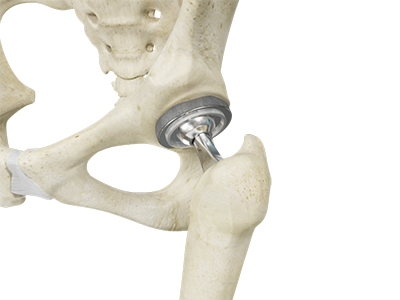
Total hip replacement is a surgical procedure in which the damaged cartilage and bone are removed from the hip joint and replaced with artificial components. The main indication for total hip replacement is arthritis.
-
Minimally Invasive Total Hip Replacement
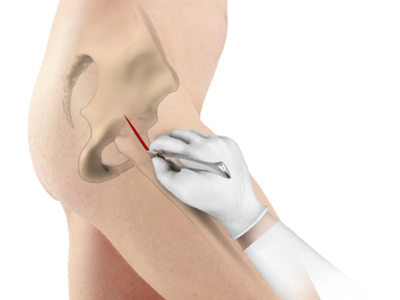
Minimally invasive total hip replacement is a surgical procedure performed through one or two small incisions rather than the single long incision of 10-12 inches as in the traditional approach.
-
Revision Hip Replacement
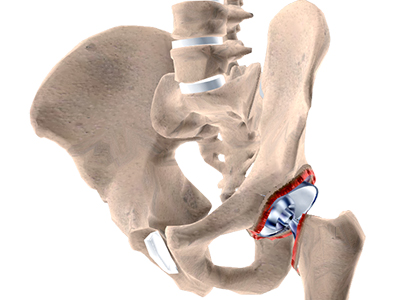
Revision hip replacement is a complex surgical procedure in which all or part of a previously implanted hip joint is replaced with a new artificial hip joint. Total hip replacement surgery is an option to relieve severe arthritis pain that limits your daily activities.
-
Outpatient Hip Replacement

Hip replacement surgery is one of the most common orthopaedic surgeries performed. It involves the replacement of the damaged hip bone (ball shaped upper end of the femur) with a ceramic ball attached to a metal stem that is fixed into the femur and placing a new cup with a special liner in the pelvis. Traditionally, the surgery was performed with a large, open incision and required the patient to stay in the hospital for several days.
-
Hip Surgery
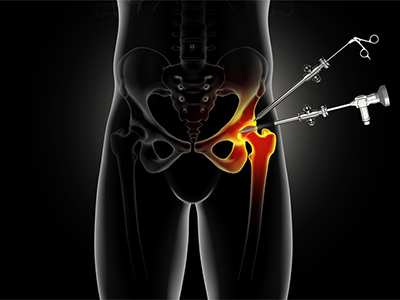
Hip surgery is a surgical procedure for the treatment of a hip injury or hip condition. The procedure involves repairing diseased or damaged structures of the hip joint in order to eliminate pain and restore normal hip function.
-
Same Day Hip Replacement
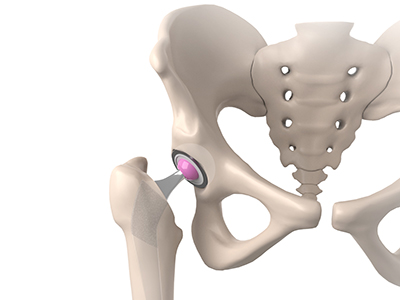
Hip replacement surgery is one of the most common orthopedic surgeries performed. It involves the replacement of the damaged hip bone (ball-shaped upper end of the femur) with a ceramic ball attached to a metal stem that is fixed into the femur and placing a new cup with a special liner in the pelvis.
-
Surgical Dislocation of the Hip
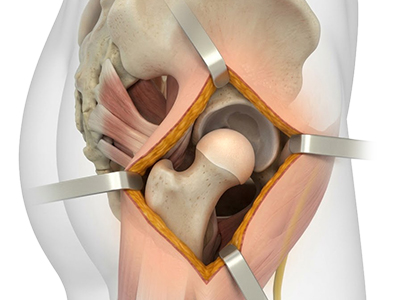
Surgical hip dislocation is an orthopedic surgical procedure in which the head of the thigh bone is displaced from the hip socket in the pelvic bone. It gives the surgeon a 360-degree view of the hip joint. Unlike accidental hip dislocation, which may be caused during a traumatic injury, your surgeon can perform the hip dislocation with minimal damage to surrounding healthy tissue.
-
Nonsurgical Hip Treatments
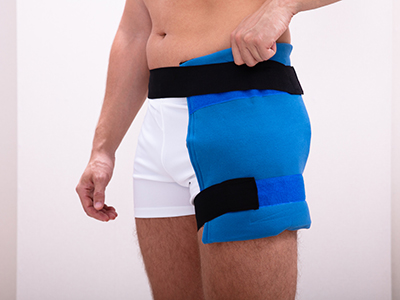
The hip is a ball-and-socket joint that connects the thigh bone to the pelvic bone. As a major weight-bearing joint with a wide range of motion, the hip is susceptible to various kinds of injuries. Hip problems may arise with overuse, acute trauma, degenerative diseases such as arthritis, and sports injuries. These conditions require appropriate treatment, which may be non-surgical or surgical.
-
Osteoarthritis of the Hip
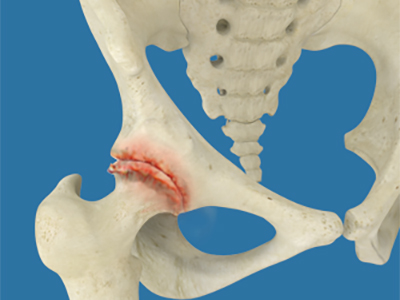
Osteoarthritis, also called degenerative joint disease, is the most common form of arthritis. It occurs most often in the elderly. This disease affects the tissue covering the ends of bones in a joint called cartilage. In osteoarthritis, the cartilage becomes damaged and worn out, causing pain, swelling, stiffness and restricted movement in the affected joint.
-
Inflammatory Arthritis of the Hip
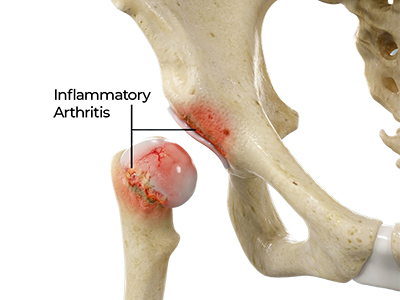
The inflammation of the joints is referred to as arthritis. Inflammation arises when the smooth lining called cartilage at the ends of bones wears away. In some cases, the inflammation is caused when the lining of the joint becomes inflamed as part of an underlying systemic disease. These conditions are referred to as inflammatory arthritis.
-
Hip Fracture
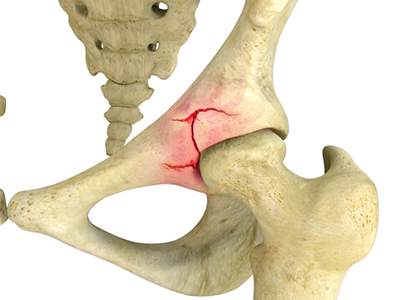
The hip joint is a “ball and socket” joint. The “ball” is the head of the femur or thighbone, and the “socket” is the cup-shaped acetabulum. The joint surface is covered by a smooth articular surface that allows pain-free movement in the joint.
-
Hip Bursitis
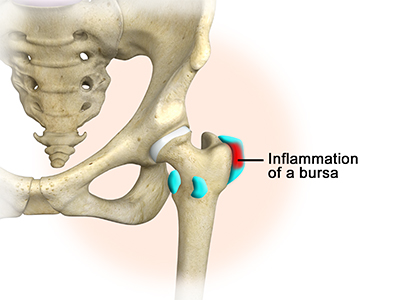
Hip bursitis is a painful condition caused by the inflammation of a bursa in the hip. Bursae are fluid-filled sacs present in the joints between bone and soft tissue to reduce friction and provide cushioning during movement.
-
Avascular Necrosis
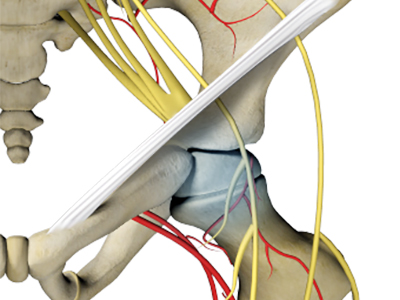
Avascular necrosis, also called osteonecrosis, is a condition in which bone death occurs because of inadequate blood supply to it. Lack of blood flow may occur when there is a fracture in the bone or a joint dislocation that may damage nearby blood vessels. The hip joint is most commonly affected; however, the knee and shoulder may also be involved.
-
Stress Fractures of the Hip
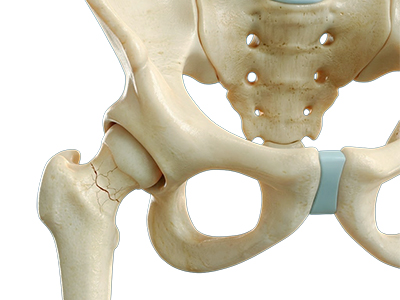
Stress fractures of the hip are a break in the upper part of the thigh bone (femur) that fits into the socket of the hip joint. It can occur in any part of the hip, however, it mostly occurs just below the ball of the ball-and-socket hip joint called the femoral neck.
-
Hip Instability
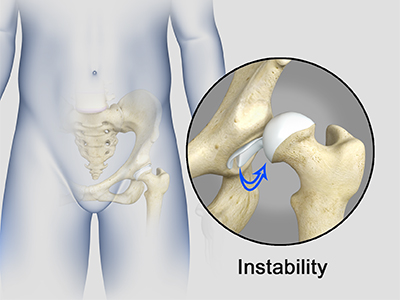
Injury or damage to these structures can lead to a condition called hip instability when the joint becomes unstable. Hip instability can be traumatic or atraumatic. Traumatic instability can be caused by injuries from sports or motor vehicle accidents. These injuries can damage the bony structures, labrum, and cartilage of the hip joint and form loose bodies.
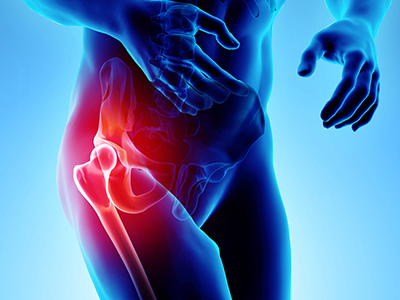
Hip Educational Videos
If you wish to be advised on the most appropriate treatment, please call Cary: (984) 271-8656(984) 271-8656 / Holly Springs: (984) 224-7482(984) 224-7482 / Morrisville: (919) 238-2440(919) 238-2440 to schedule an appointment or click here to request an appointment online.